El is often described as the father of gods and creator of mankind. El had many epithets, including "Bull El," "El the King," and "Father of Mankind," reflecting his authority, wisdom, and paternal role.
When you join the El Car Wash Monthly Wash Club, you have the ability to wash your vehicle for less than a $1 per day at over 75 locations! There are four different types of car wash packages to choose from and can be selected as an Unlimited Wash or Single Wash.
El vs él are two different words. El without an accent is a definite article (the) and more often it’s placed before concrete singular masculine nouns. Él with an accent is a pronoun for the 3rd person singular: it replaces a male subject or object.
he word El (אל) comes from a root word meaning "might, strength, power" and probably derives from the Ugaritic term for god. In Scripture, the primary meanings of this root are "god" (pagan or false gods), "God" (the true God of Israel), and sometimes "the mighty" (referring to men or angels).
He was usually portrayed as an old man with a long beard and, often, two wings. He was the equivalent of the Hurrian god Kumarbi and the Greek god Cronus. In the Old Testament, El is commonly used as a synonym for Yahweh and less commonly as the general term for “deity.”
Let's look at "él" vs "el". Él is a subject personal pronoun. It has a written accent on the letter é. The direct English translation is he. For example: Él tiene muchos amigos. He has lots of friends. El is written without an accent on the letter e. It is a definite article.
In Spanish, every noun has a gender, either masculine or feminine. And you need to know the gender because the adjectives and articles that accompany a noun have to match with it. “El” is the article for masculine nouns and “La” is the article for feminine nouns.
El can be translated either as "God" or "god," depending upon whether it refers to the one God or to a lesser divine being. As an element in proper names, "el" is found in ancient Aramaic, Arabic, and Ethiopic languages, as well as Hebrew (e.g. "Samu·el" and "Jo·el").
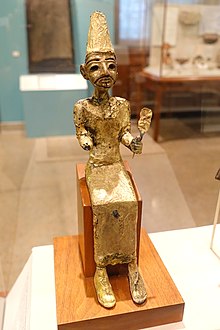 El is often described as the father of gods and creator of mankind. El had many epithets, including "Bull El," "El the King," and "Father of Mankind," reflecting his authority, wisdom, and paternal role.